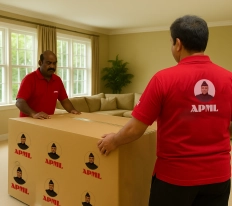
My friend Imran once tried to get a double-door fridge up to a third-floor flat in Tolichowki. No lift, a staircase with a sharp turn, and a landlord who watched from the balcony saying “careful, careful” at exactly the wrong moments. The fridge got stuck. Four men sweated. Someone’s cousin arrived with a rope. Eventually it went up, with a dent the size of a small plate, and Imran has been telling the story ever since, usually with sound effects.
Hyderabad is like that. The city is growing so fast that neighborhoods feel like different towns, the traffic around Hitec City and Gachibowli can eat an afternoon, and every gated community has its own idea of what counts as a reasonable moving window. I’ve shifted twice here and helped on a few more, so here’s what I’d say if we were splitting a plate of Irani chai and osmania biscuits.
Check the calendar and the gate
Most people lock in a date and discover the rules later. Flip that. Many communities in Kondapur, Miyapur, Kukatpally and Manikonda ask for a deposit, want written intimation a few days ahead, or allow goods vehicles only at certain hours. Some limit weekend move-ins. A few have lifts so small they’d struggle with a suitcase. Call the office, ask about timing and lift size, and write down what they tell you.
Then think about the weather. April and May get properly fierce, and a loading crew can wilt by noon. The monsoon, roughly July to September, brings sudden downpours that flood underpasses and turn a half-loaded truck into a nightmare. November to February is the kindest stretch, if you can swing it.
And start early. Seven in the morning is a different city from ten, especially if your route touches the ORR, Panjagutta or the Madhapur stretch.
Picking a crew you won’t regret
Type Packers and Movers Hyderabad into a search bar and you’ll scroll through pages of near-identical sites, all promising “zero damage” and “best rates.” I stopped trusting those lines a while ago. They’re free to write and impossible to check from a landing page.
What actually helps is asking for a survey. In person is ideal, a long video call is fine. Show them everything: the loft, the balcony clutter, the heavy almirah, the washing machine, the bed with storage underneath. A quote given without seeing any of that is basically a guess, and guesses love to grow on moving day.
Collect at least three quotes and compare what’s inside, not only the total. Does it include packing material? Loading and unloading? Dismantling and reassembly? Extra charges where there’s no lift? Transit insurance? The cheapest number often looks lovely until the “additional charges” arrive, one after another, like guests at a wedding.
Keep it all in writing. WhatsApp counts. Screenshots count. A verbal promise on a noisy call evaporates.
Reviews, referrals and a raised eyebrow
I read reviews the way I read restaurant ratings, skeptically. “Good service!” tells me nothing. “Team came forty minutes late, wrapped the TV properly, final bill matched the quote” tells me plenty, because real days are a bit messy and honest reviews show it.
Referrals are better. A colleague of mine shifted from Secunderabad to Nizampet last year and mentioned, almost in passing, that Agarwal Packers and Movers Hyderabad had carried her glass dining table and a very fussy set of bell-metal vessels without a scratch. No big speech, just a quiet note. Those are the stories I trust. Still, I’d say the same about any name: check for yourself. Ask for the survey, read the terms, and notice how they respond when you ask awkward questions. If someone gets prickly before you’ve paid, imagine the mood afterward.
What to hand over, what to keep
Let the professionals take the heavy, fragile and awkward things. TVs, mirrors, crockery, glass tables, the wardrobe you assembled with an Allen key and some creative language. They’ve got the foam, corrugated boards and corner guards, and they’re quicker than you’ll ever be.
But keep the irreplaceable stuff with you. Documents, laptops, chargers, medicines, jewelry, a little cash, school certificates. Put it all in a bag that rides in your car, not on the truck. A friend once spent two hours on moving night tearing open cartons for his rent agreement, which had ended up in a box marked “misc kitchen.” He’s mostly recovered.
Photograph your furniture and electronics before anything gets wrapped. Five minutes, tops. If something arrives dented, you’ll have proof instead of an argument on the road.
Carry less, pay less
Here’s what people realize a little late: you’re paying for volume, one way or another. Before the survey, walk through your place with a colder heart than usual. Clothes you haven’t worn since 2020, cables for gadgets that no longer exist, a chair with one suspicious leg. Sell it, donate it, or let it go.
It feels oddly good. You arrive in the new place with less baggage, and not only the cardboard kind.
The day itself
Be there. I know it’s tempting to leave it all to the crew and slip away for a coffee, but somebody has to say which box goes in which room, check the inventory and answer the dozen small questions that always pop up. Keep water around, and some snacks, because moving is hungry work. Tip fairly if they’ve earned it.
Then do one last lap of the old flat. Every cupboard, the space above the loft, balcony corners, behind every door. Somebody always forgets something. I once left a whole shelf of pickle jars behind, and honestly, I still think about them.
And then, the hush
When the truck finally pulls away and the new flat fills with unfamiliar cartons, there’s often a strange quiet. Tired, relieved, a bit sad, all at once. That’s normal. Don’t try to unpack tonight. Make the bed, find the kettle, order something hot. The kitchen can wait until morning.
Moving is never perfectly smooth, and I won’t pretend otherwise. Something will run late, something will land in the wrong room, and a neighbor will definitely grumble about the lift. But with some planning, honest questions and people who actually listen, it becomes something you get through rather than something that gets through you.
Imran, by the way, still owns that fridge. The dent, he says, is how he knows it’s his.